Tropical Medicine In 20th Cen by Power
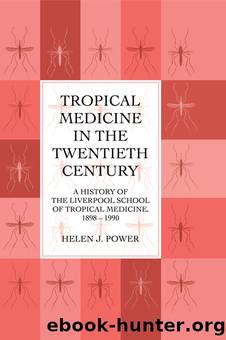
Author:Power [Power]
Language: eng
Format: epub
Tags: History, General
ISBN: 9781136174070
Google: nTgsBgAAQBAJ
Publisher: Routledge
Published: 2012-11-12T15:54:25+00:00
TECHNICAL ASSISTANCE AS GOVERNMENT POLICY
The policies establishing university colleges in the colonies were followed by programmes of âtechnical assistanceâ to colonial and Commonwealth countries. Technical assistance referred to the provision of experts and the training and education within the UK for overseas subjects. This became a popular way of delivering aid to the developing world. National and international programmes such as the Economic Co-operation Administration of the USA and the Expanded Technical Assistance Programme of the UN emphasised economic development, but projects concerned with improvements in health were acceptable if appropriately drafted.24 In March 1959, Britain set aside £150,000 under the new CDW Act for technical assistance. This was not publicised, preventing a flood of applications that could not be met from such a small sum. It was a gesture showing that international experts or consultants were not an invention of the UN but an established part of British policy. It also aimed at keeping potentially lucrative aid projects in colonial and Commonwealth territories in British hands if possible.
The Colonial Advisory Service, responsible for administering technical assistance programmes, served a greatly reduced population as decolonisation progressed. Its future was considered as part of moves to amalgamate the function and resources of the CO and the Commonwealth Relations Office into a single Commonwealth Office. This was the idea of Sir Hilton Poynton, Permanent Under Secretary of State for the CO, from August 1959. The merger proposal was rejected, and in its place the Department of Technical Co-operation was created under a junior Minister. The DTC administered Britainâs technical assistance to what remained of the colonies and members of the Commonwealth who were eligible to receive assistance.25
Under the DTC employment overseas would be for limited periods and form part of a career based primarily in Britain or in the service of a British Institution. Many of the staff for the new department came from the CO and there was some concern that technical assistance would appear as neo-colonialism. The DTC was created on 24 July 1961 with Denis Vosper as Secretary for Technical Co-operation. The first task was to determine the existing arrangements and develop further initiatives. âThe supply of high-grade medical personnel and advanced medical trainingâ was listed as one of twelve priority areas on which the DTC would concentrate.26 Vosper suggested the DTCâs effectiveness could be enhanced by persuading the corporate and university sectors to release staff for overseas service. The LSTM was ahead of the game.
Download
This site does not store any files on its server. We only index and link to content provided by other sites. Please contact the content providers to delete copyright contents if any and email us, we'll remove relevant links or contents immediately.
| Administration & Medicine Economics | Allied Health Professions |
| Basic Sciences | Dentistry |
| History | Medical Informatics |
| Medicine | Nursing |
| Pharmacology | Psychology |
| Research | Veterinary Medicine |
Periodization Training for Sports by Tudor Bompa(8278)
Why We Sleep: Unlocking the Power of Sleep and Dreams by Matthew Walker(6729)
Paper Towns by Green John(5196)
The Immortal Life of Henrietta Lacks by Rebecca Skloot(4593)
The Sports Rules Book by Human Kinetics(4398)
Dynamic Alignment Through Imagery by Eric Franklin(4223)
ACSM's Complete Guide to Fitness & Health by ACSM(4062)
Kaplan MCAT Organic Chemistry Review: Created for MCAT 2015 (Kaplan Test Prep) by Kaplan(4015)
Introduction to Kinesiology by Shirl J. Hoffman(3778)
Livewired by David Eagleman(3778)
The Death of the Heart by Elizabeth Bowen(3626)
The River of Consciousness by Oliver Sacks(3607)
Alchemy and Alchemists by C. J. S. Thompson(3526)
Bad Pharma by Ben Goldacre(3429)
Descartes' Error by Antonio Damasio(3284)
The Emperor of All Maladies: A Biography of Cancer by Siddhartha Mukherjee(3166)
The Gene: An Intimate History by Siddhartha Mukherjee(3100)
The Fate of Rome: Climate, Disease, and the End of an Empire (The Princeton History of the Ancient World) by Kyle Harper(3070)
Kaplan MCAT Behavioral Sciences Review: Created for MCAT 2015 (Kaplan Test Prep) by Kaplan(2988)
